Upcoming Residential Projects in Bangalore
New Projects in Bangalore
If you are searching for a residential property priced around ₹70 lakhs in the KIADB–Devanahalli corridor, Prestige KIADB Phase 2 is worth evaluating, as the supplied project details list 1 BHK apartments at ₹70 lakhs, with sizes of approximately 567–571 sq ft. For buyers considering a lower entry price, Nikoo Homes 9 KIADB lists a studio from ₹60 lakhs onwards, while its 1 BHK starts at ₹99 lakhs onwards. The two options therefore serve different budget and configuration preferences.
Prestige KIADB Phase 2 Vs Nikoo Homes 9 KIADB: 1 BHK Under ₹70 Lakhs
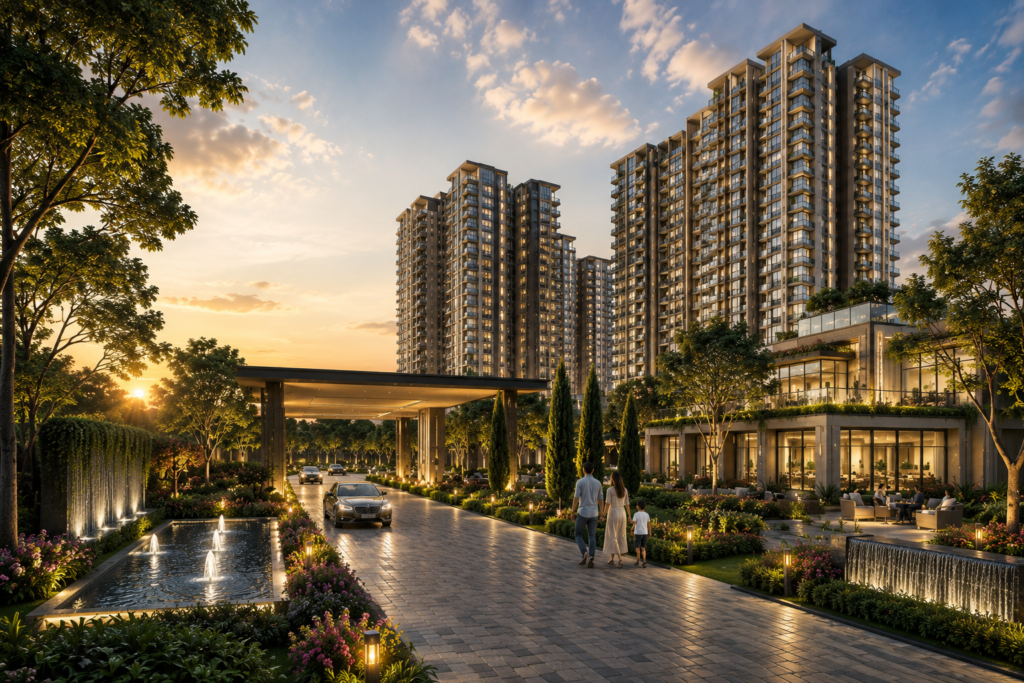
Prestige KIADB Phase 2: An Overview
Prestige KIADB Phase 2 is a residential development planned across 11.91 acres, according to the project information supplied for this article.
The project comprises 9 residential towers, with each tower planned at G+24 floors. The supplied details indicate a total of 1,788 homes, covering 1 BHK, 2 BHK and 3 BHK configurations.
For buyers specifically searching for apartments under ₹70 lakhs in KIADB, the most relevant offering is the 1 BHK category.
The supplied information lists 858 units of 1 BHK apartments, with sizes ranging from approximately 567 to 571 sq ft and a stated price of ₹70 lakhs.
This makes Prestige KIADB Phase 2 particularly relevant to buyers whose primary requirement is a conventional 1 BHK rather than a studio.
Price note: All prices in this article are based on the project facts supplied for the content brief. Buyers should verify the latest price, availability, applicable charges and official project documentation before making any financial commitment.
What Are the Key Facts About Prestige KIADB Phase 2?
| Project Detail | Information |
|---|---|
| Project Name | Prestige KIADB Phase 2 |
| Land Area | 11.91 Acres |
| Residential Towers | 9 |
| Tower Structure | G+24 Floors |
| Total Homes | 1,788 |
| Configurations | 1, 2 & 3 BHK |
| 1 BHK Size | 567–571 sq ft |
| 1 BHK Units | 858 |
| 1 BHK Listed Price | ₹70 Lakhs |
| 2 BHK + 2T | 828–880 sq ft |
| 2 BHK + 2T Units | 195 |
| 2 BHK + 2T Listed Price | ₹1 Cr* |
| Large 2 BHK + 2T | 1,087–1,310 sq ft |
| Large 2 BHK Units | 196 |
| Large 2 BHK Listed Price | ₹1.3 Cr |
| 3 BHK + 2T | 1,445–1,469 sq ft |
| 3 BHK + 2T Units | 245 |
| 3 BHK + 2T Listed Price | ₹1.55 Cr |
| 3 BHK + 3T | 1,597–1,662 sq ft |
| 3 BHK + 3T Units | 144 |
| 3 BHK + 3T Listed Price | ₹1.99 Cr |
| Large 3 BHK + 3T | 1,757–1,801 sq ft |
| Large 3 BHK + 3T Units | 150 |
| Large 3 BHK + 3T Listed Price | ₹2.2 Cr |
*Prices are supplied figures and should be reconfirmed before purchase. Final acquisition cost may include additional applicable charges.
Is Prestige KIADB Phase 2 the Best Residential Project Under ₹70 Lakhs?
If your requirement is specifically a 1 BHK apartment around ₹70 lakhs, Prestige KIADB Phase 2 is one of the options worth comparing based on the supplied project details.
The key reason is straightforward: the project lists its 1 BHK homes at ₹70 lakhs, while the configuration measures approximately 567–571 sq ft.
However, the word “best” needs context.
A buyer looking for the lowest possible entry price may find studio apartments priced below ₹70 lakhs. A buyer looking for a separate bedroom may prefer a 1 BHK even if it costs slightly more.
Therefore, the right comparison is not simply:
Which project is cheaper?
It is:
Which configuration gives me the right combination of price, space and purpose?
Prestige KIADB Phase 2 vs Nikoo Homes 9 KIADB
One of the most useful comparisons for this search intent is Nikoo Homes 9 KIADB vs Prestige KIADB Phase 2.
The two projects have different configuration mixes and price entry points. Nikoo Homes 9 starts with a studio, while Prestige KIADB Phase 2 starts its supplied entry-level comparison with a 1 BHK.
Instead of comparing them only by starting price, it is better to divide the options into three broad buyer segments.
Affordable Segment: ₹60–70 Lakhs
This is the segment most relevant to buyers searching for 1 BHK under ₹70 lakhs, studio flats under ₹70 lakhs or affordable apartments in KIADB.
Prestige KIADB Phase 2
The supplied details list:
- 1 BHK
- 567–571 sq ft
- ₹70 lakhs
- 858 units
Nikoo Homes 9 KIADB
The supplied details list:
- Studio
- Approximately 506 sq ft
- ₹60 lakhs onwards
The important difference is the configuration.
Nikoo Homes 9 has the lower listed entry price, but the entry-level product is a studio. Prestige KIADB Phase 2 is priced ₹10 lakhs higher in the supplied figures but offers a 1 BHK.
Affordable Segment Comparison
| Factor | Prestige KIADB Phase 2 | Nikoo Homes 9 KIADB |
| Entry Configuration | 1 BHK | Studio |
| Listed Starting Price | ₹70 Lakhs | ₹60 Lakhs onwards |
| Approx. Size | 567–571 sq ft | ~506 sq ft |
| Buyer Profile | Buyer wanting a 1 BHK | Buyer comfortable with studio living |
| Main Advantage to Compare | Separate bedroom | Lower entry price |
Who should compare this segment?
If ₹70 lakhs is your approximate ceiling and you specifically want a 1 BHK, Prestige KIADB Phase 2 is more directly aligned with your requirement.
If your priority is to enter the market at the lowest supplied price and a studio meets your requirements, Nikoo Homes 9 becomes relevant.
Mid-Level Segment: ₹70 Lakhs–₹1.5 Crore
The comparison becomes more interesting once the buyer’s budget increases.
Prestige KIADB Phase 2 includes 2 BHK configurations, while Nikoo Homes 9 moves through larger 1 BHK and 2 BHK formats.
Prestige KIADB Phase 2
The supplied options include:
2 BHK + 2T
- 828–880 sq ft
- 195 units
- ₹1 crore*
Large 2 BHK + 2T
- 1,087–1,310 sq ft
- 196 units
- ₹1.3 crore
Nikoo Homes 9 KIADB
The supplied options include:
1 BHK
- Approximately 879 sq ft
- ₹99 lakhs onwards
1 BHK + Study
- Approximately 1,016 sq ft
- ₹1.12 crore onwards
2 BHK
- Approximately 1,257 sq ft
- ₹1.43 crore onwards
Mid-Level Comparison
| Factor | Prestige KIADB Phase 2 | Nikoo Homes 9 KIADB |
| 1 BHK | ₹70 Lakhs | ₹99 Lakhs onwards |
| 1 BHK + Study | — | ₹1.12 Cr onwards |
| 2 BHK | — | ₹1.43 Cr onwards |
| 2 BHK + 2T | ₹1 Cr* | — |
| Large 2 BHK + 2T | ₹1.3 Cr | — |
| Largest Listed Size in This Band | 1,310 sq ft | ~1,428 sq ft |
For buyers in this bracket, configuration becomes more important than the headline starting price. Someone looking for a 2 BHK around ₹1 crore may find Prestige Projects in Bangalore KIADB Phase 2 more relevant based on the supplied pricing. A buyer who wants a larger 1 BHK, 1 BHK + Study or 2 BHK can compare the corresponding Nikoo Homes 9 options.
High-Level Segment: ₹1.5 Crore and Above
At the higher end, the comparison moves into larger 3 BHK and premium configurations.
Prestige KIADB Phase 2
The supplied options include:
- 3 BHK + 2T: 1,445–1,469 sq ft — ₹1.55 crore
- 3 BHK + 3T: 1,597–1,662 sq ft — ₹1.99 crore
- Large 3 BHK + 3T: 1,757–1,801 sq ft — ₹2.2 crore
Nikoo Homes 9 KIADB
The supplied options include:
- 2 BHK + Study: ~1,428 sq ft — ₹1.59 crore
- 3 BHK: ~1,714 sq ft — ₹1.85 crore* onwards
- 3 BHK + Study: ~1,911 sq ft — ₹2.11 crore* onwards
- Loft: ~2,190 sq ft — ₹2.56 crore onwards
High-Level Comparison
| Factor | Prestige KIADB Phase 2 | Nikoo Homes 9 KIADB |
| 3 BHK + 2T | ₹1.55 Cr | — |
| 3 BHK | — | ₹1.85 Cr* onwards |
| 3 BHK + 3T | ₹1.99 Cr | — |
| 3 BHK + Study | — | ₹2.11 Cr* onwards |
| Large 3 BHK + 3T | ₹2.2 Cr | — |
| Loft | — | ₹2.56 Cr onwards |
| Largest Listed Size | 1,801 sq ft | ~2,190 sq ft |
At this level, buyers should stop focusing exclusively on the starting price.
The more useful questions become:
- How much usable space do I receive?
- Which floor plan works for my family?
- What is the total acquisition cost?
- How does the payment schedule fit my finances?
- What documentation has been verified?
- What are the likely ownership and maintenance costs?
Nikoo Homes 9 KIADB vs Prestige KIADB Phase 2: Quick Decision Guide
| Your Priority | Option to Compare |
| Lowest supplied entry price | Nikoo Homes 9 Studio |
| 1 BHK around ₹70 Lakhs | Prestige KIADB Phase 2 |
| 1 BHK around ₹1 Cr | Compare both based on configuration and size |
| 2 BHK around ₹1 Cr | Prestige KIADB Phase 2 |
| Larger 2 BHK | Compare Prestige’s Large 2 BHK with Nikoo Homes 9’s 2 BHK options |
| 3 BHK around ₹1.5–₹2 Cr | Compare both projects’ 3 BHK configurations |
| Larger premium configuration | Compare actual floor plans and usable area |
This approach is more practical than simply declaring one project the winner.
What Are the Apartment Configurations in Prestige KIADB Phase 2?
Prestige KIADB Phase 2 is planned with 1, 2 and 3 BHK apartments.
1 BHK Apartments
The 1 BHK is the most relevant configuration for the under-₹70-lakh search.
- Size: 567–571 sq ft
- Units: 858
- Listed price: ₹70 lakhs
For a single buyer, young professional or buyer looking for a compact home, this is the project’s entry-level configuration based on the supplied information.
The key consideration is whether the available area is sufficient for your intended use.
2 BHK Apartments
The project has two supplied 2 BHK categories.
2 BHK + 2T
- 828–880 sq ft
- 195 units
- Listed price: ₹1 crore*
Large 2 BHK + 2T
- 1,087–1,310 sq ft
- 196 units
- Listed price: ₹1.3 crore
These options move the project into the mid-level budget segment.
3 BHK Apartments
The supplied project details include three 3 BHK categories.
3 BHK + 2T
- 1,445–1,469 sq ft
- 245 units
- ₹1.55 crore
3 BHK + 3T
- 1,597–1,662 sq ft
- 144 units
- ₹1.99 crore
Large 3 BHK + 3T
- 1,757–1,801 sq ft
- 150 units
- ₹2.2 crore
The wider configuration range means the project is not limited to entry-level buyers.
Is ₹70 Lakhs the Final Cost of a Prestige KIADB Phase 2 1 BHK?
No buyer should assume that the advertised ₹70 lakh price represents the final all-inclusive purchase cost.
The ₹70 lakh figure supplied for this article is the listed price for the 1 BHK configuration. The final amount can depend on applicable taxes, registration-related costs and project-specific charges.
Before paying a booking amount, ask for a detailed cost sheet.
Check:
- Base apartment price
- Applicable taxes
- Registration and stamp-duty costs
- Parking charges, if applicable
- Floor-rise charges, if applicable
- Preferential-location charges, if applicable
- Maintenance advance
- Other project-specific charges
- Payment schedule
- Cancellation and refund terms
This is particularly important for buyers with a strict ₹70-lakh or ₹1-crore budget.
What Should Buyers Under ₹1 Crore Check Before Booking?
Buying within a fixed budget requires more than finding a property with the right headline price.
1. Calculate the Complete Acquisition Cost
A ₹70-lakh base price does not automatically mean the buyer only needs ₹70 lakhs.
Request the complete cost sheet and calculate your actual cash requirement.
2. Compare Usable Area
Price per square foot can be misleading when comparing differently designed apartments.
Look at the actual floor plan and usable/carpet area before deciding.
3. Check the Configuration
A studio, 1 BHK and 2 BHK serve different purposes.
Do not choose a studio only because it has the lowest price if you actually require a separate bedroom.
4. Verify Project Documentation
Check applicable approvals, registration status, sanctioned plans and developer documentation through authoritative sources.
5. Understand the Payment Schedule
A property can fit your total budget but still create cash-flow pressure if the payment schedule does not match your finances.
Is Prestige KIADB Phase 2 Suitable for NRI Investors?
NRI buyers can evaluate Prestige KIADB Phase 2 as a potential property purchase, but the investment decision should be based on verified documentation and realistic financial assumptions.
An NRI should pay particular attention to:
- Project documentation
- Registration and approval status
- Agreement terms
- Complete cost sheet
- Payment schedule
- Financing eligibility
- Tax implications
- Rental demand assumptions
- Property management requirements
- Potential resale liquidity
Avoid basing the investment decision solely on expected appreciation. No future return should be treated as guaranteed.
Are Pre-Launch Projects in KIADB Worth Considering?
The term pre-launch is commonly used in property marketing, but buyers should understand exactly what stage a project has reached.
A buyer may encounter references to:
- Pre-launch
- New launch
- Expression of Interest
- Booking
- Official launch
- Registered project
- Construction stage
These terms should not be treated as interchangeable.
If an EOI or booking amount is requested, ask for written information explaining:
- What the payment represents
- Whether it is refundable
- When it converts into a booking
- What happens if the project terms change
- What documentation is available at that stage
The safest approach is to verify the project’s current legal and regulatory position before making a financial commitment.
Studio Apartment or 1 BHK: Which Is Better Under ₹70 Lakhs?
There is no universal winner between a studio and a 1 BHK. The right choice depends on how you intend to use the property.
For example, a buyer prioritising the lowest entry price may prefer a studio.
A buyer who wants a separate bedroom and a more conventional residential layout may prefer a 1 BHK.
In the supplied comparison:
Nikoo Homes 9: Studio — ₹60 lakhs onwards — ~506 sq ft
Prestige KIADB Phase 2: 1 BHK — ₹70 lakhs — 567–571 sq ft
The ₹10-lakh difference should therefore be evaluated alongside the configuration and size.
Who Should Consider Prestige KIADB Phase 2?
First-Time Buyers
The 1 BHK at the supplied ₹70-lakh price point makes the project relevant to buyers entering the residential market with a defined budget.
However, first-time buyers should calculate the complete purchase cost before deciding.
Young Professionals
A 1 BHK can provide a separate bedroom while keeping the initial apartment price below the ₹1-crore range, based on the supplied pricing.
NRI Buyers
NRIs can consider the project after completing the required legal, financial and documentation checks.
Remote purchasing makes independent verification even more important.
Families
Families should carefully assess whether a 1 BHK meets their needs. The project also provides 2 and 3 BHK options, but these are in substantially higher price brackets.
Prestige KIADB Phase 2: Pros and Cons
Potential Advantages
- 1 BHK listed at ₹70 lakhs
- 567–571 sq ft 1 BHK size
- 858 listed 1 BHK units
- 11.91-acre development
- 1,788 total homes
- 1, 2 and 3 BHK configurations
- Multiple 2 BHK and 3 BHK size categories
- Direct relevance to buyers searching for apartments around ₹70 lakhs in KIADB
What Buyers Should Check
- Whether the ₹70-lakh price is still current
- Current unit availability
- Complete acquisition cost
- Applicable project-specific charges
- Registration and approval status
- Agreement terms
- Payment schedule
- Exact floor plan and usable area
- Maintenance-related costs
- Investment assumptions
How Should You Compare New Projects in Devanahalli?
If you are comparing New Projects in Devanahalli, avoid creating a shortlist based only on starting price.
Use a consistent framework.
| Factor | What to Check |
| Price | Complete acquisition cost |
| Size | Carpet/usable area |
| Configuration | Studio, 1, 2 or 3 BHK |
| Location | Actual project location |
| Project Stage | Current development and documentation status |
| Approvals | Verify through authoritative sources |
| Payment Plan | Match with your cash flow |
| Rental Demand | Use realistic, verified market data |
| Resale | Assess potential liquidity |
| Ownership Cost | Maintenance and other recurring expenses |
This method gives buyers a more meaningful comparison.
Frequently Asked Questions
1. Is there a 1 BHK under ₹70 lakhs in KIADB?
Based on the supplied project information, Prestige KIADB Phase 2 lists a 1 BHK at ₹70 lakhs, with a size of approximately 567–571 sq ft.
2. What is the starting price of Prestige KIADB Phase 2?
The supplied pricing lists the 1 BHK from ₹70 lakhs. Other configurations are priced higher, beginning with the supplied 2 BHK + 2T figure of ₹1 crore*.
3. Does Nikoo Homes 9 have apartments under ₹70 lakhs?
The supplied information lists a studio from ₹60 lakhs onwards. Its listed 1 BHK starts at ₹99 lakhs onwards.
4. Which is cheaper: Nikoo Homes 9 or Prestige KIADB Phase 2?
Nikoo Homes 9 has the lower supplied entry price at ₹60 lakhs onwards, but that price applies to a studio. Prestige KIADB Phase 2 lists a 1 BHK at ₹70 lakhs, so the two entry-level options are different configurations.
5. What is the size of the Prestige KIADB Phase 2 1 BHK?
The supplied size range is approximately 567–571 sq ft.
6. How many 1 BHK apartments are planned in Prestige KIADB Phase 2?
The supplied project facts state 858 1 BHK units.
7. Is Prestige KIADB Phase 2 suitable for investment?
It can be evaluated as an investment option, but buyers should assess the total acquisition cost, documentation, demand, ownership costs and realistic rental or resale assumptions. Future appreciation or ROI should not be treated as guaranteed.
8. Should I buy a studio or 1 BHK under ₹70 lakhs?
It depends on your requirements. A studio can provide a lower entry price, while a 1 BHK offers a separate bedroom. Compare configuration, usable area, total cost and intended use before deciding.
Conclusion: Is Prestige KIADB Phase 2 Worth Considering Under ₹70 Lakhs?
For buyers specifically looking for a 1 BHK around ₹70 lakhs in the KIADB–Devanahalli corridor, Prestige KIADB Phase 2 is a relevant project to evaluate based on the supplied project facts.
Its listed 1 BHK configuration measures approximately 567–571 sq ft, with 858 units in this category.
The comparison with Nikoo Homes 9 KIADB also highlights an important point: the cheapest entry price does not necessarily represent the same type of property. Bhartiya City Bangalore supplied ₹60-lakh entry price applies to a studio, whereas Prestige KIADB Phase 2’s ₹70-lakh entry point applies to a 1 BHK.
For buyers with larger budgets, both projects extend into higher configurations, but the layouts and pricing structures differ.
Ultimately, the right choice should be based on configuration, usable space, total acquisition cost, documentation, payment schedule and your purpose for buying. Do not make the decision solely on the starting price.
Questions for Buyers
- Would you choose a ₹60-lakh studio or a ₹70-lakh 1 BHK if both were available?
- For an investment property, would you prioritise lower entry price or larger usable area?
- When comparing projects in KIADB, what matters most to you: price, configuration, connectivity or long-term holding potential?
This article uses only the project information supplied in the brief. It does not add unverified amenities, possession dates, RERA numbers, rental yields, appreciation projections, connectivity times, approvals or guaranteed investment returns. Prices and availability should be reconfirmed from the latest authoritative project documentation before publication or before a buyer makes a financial decision.
Nikoo Homes 9 KIADB: Understanding the Value of Better Planning Efficiency
When comparing apartments, most buyers focus first on the price per square foot or the total apartment size. However, another important factor is how efficiently the space is planned.
The information under “The Nikoo Way” focuses on providing the same usable living area with a more efficient super built-up area (SBA).
Quick Overview
The example shared for Nikoo Homes 9 KIADB compares a 1,155 sq. ft. usable 3-bedroom home. According to the document, the Nikoo Way example achieves 71% planning efficiency with an SBA of 1,626 sq. ft. The comparison example shows the same usable area with a larger SBA of 1,764 sq. ft. and 65% planning efficiency.
Why Does Planning Efficiency Matter?
In simple terms, if two apartments offer a similar usable living area, but one requires you to pay for a lower super-built-up area, the overall cost may be more efficient.
The document illustrates this using the same market rate of ₹11,500 per sq. ft.:
| Comparison | Conventional Example | Nikoo Way Example |
|---|---|---|
| Usable Area | 1,155 sq. ft. | 1,155 sq. ft. |
| Super Built-Up Area | 1,764 sq. ft. | 1,626 sq. ft. |
| Planning Efficiency | 65% | 71% |
| Market Rate | ₹11,500 | ₹11,500 |
| Example Landed Cost | ₹2.03 Cr | ₹1.87 Cr |
Based on this illustrative comparison, the document shows a potential difference of approximately ₹15.87 lakh for the same usable living area.
A Better Way to Compare Apartments
Instead of looking only at the advertised apartment size, buyers can consider Nikoo Homes 9 KIADB:
Nikoo Homes 9 KIADB Total Cost ÷ Actual Usable Area
They should also compare:
- Carpet and usable area
- Super built-up area
- Room dimensions
- Floor-plan efficiency
- Balcony and other accessible spaces
- Complete acquisition cost
This approach can help buyers understand how much space they are actually receiving for the amount they pay.
What Does This Mean for Nikoo Homes 9?
Based on the provided Nikoo Way material, the focus is on designing homes with a higher planning efficiency so that buyers may get the same usable living area with a lower SBA requirement. The example specifically highlights 71% planning efficiency for a 1,155 sq. ft. usable 3-bedroom home.
For buyers evaluating Nikoo Homes 9 Carpet Area, this makes planning efficiency an important factor to compare alongside location, pricing, and apartment configuration.
Final Thoughts
A larger advertised apartment size does not always mean more practical living space. The actual usable area and efficiency of the floor plan can make a significant difference to both everyday living and the total cost of a home.
The Nikoo Homes 9 KIADB example suggests that better planning efficiency could reduce the amount of super built-up area a buyer pays for while maintaining the same usable living area. However, buyers should verify the exact carpet area, usable area, SBA, floor plan, and complete cost sheet for their selected apartment before making a purchase decision.
Disclaimer: The figures above are based on the illustrative comparison provided in “The Nikoo Way” material. Actual apartment sizes, prices, efficiency calculations, and final costs may vary depending on the selected unit and official project documentation.
India Housing Prices 2026: Bengaluru Leads Top 8 Cities With 26% Annual Growth
Quick answer: India housing prices 2026 rose year-on-year in all eight major property markets during Q2 (April–June). Bengaluru recorded the steepest jump at 26% (average ₹9,931/sq ft), followed by MMR at 20.4% (₹15,422/sq ft) and Pune at 13.7%, which crossed ₹8,000/sq ft for the first time. Overall home sales across the eight cities fell 6.1% YoY to 91,729 units, even as prices climbed — a sign the market is tilting toward affordability pressure rather than a supply glut.
Key Takeaways
- India housing prices 2026 rose in every one of the top 8 cities tracked this quarter — no market recorded a decline.
- Bengaluru is India’s fastest-appreciating housing market: +26% YoY, average price ₹9,931/sq ft, despite a 9.2% sales dip.
- Pune crossed the ₹8,000/sq ft mark for the first time, up 13.7% YoY, even as sales fell 20.8%.
- MMR (Mumbai Metropolitan Region) stayed the largest market by both sales volume (24,112 units) and price (₹15,422/sq ft), up 20.4% YoY.
- Ahmedabad remains the most affordable of the eight cities at ₹5,295/sq ft, but posted the strongest quarter-on-quarter rise (+7%).
- Chennai had the smallest annual price rise (4.4%) but the biggest jump in sales volume (+36% YoY).
- Across all 8 cities: 91,729 homes sold vs 89,161 new units launched in Q2 2026 — sales down 4.4% QoQ and 6.1% YoY.
- A stable RBI repo rate of 5.25% and easing inflation have kept borrowing costs predictable, cushioning the affordability squeeze.
- The data behind this India housing prices 2026 report comes from News Sources, covering Ahmedabad, Bengaluru, Chennai, Delhi-NCR, Hyderabad, Kolkata, MMR, and Pune.
India Housing Prices 2026: City-Wise Snapshot
Bengaluru led all eight cities in annual price growth, with average rates climbing 26% year-on-year to ₹9,931 per square foot. That appreciation came even as sales slipped to 14,186 units from 15,628 units a year earlier — a decline of 9.2%. Developers, however, appear undeterred: new launches in the city rose 36.7% annually to 16,827 units, pointing to continued confidence in long-term demand.
The Mumbai Metropolitan Region (MMR) remained the country’s largest and most expensive market. It recorded 24,112 housing sales in Q2 2026 at an average price of ₹15,422 per square foot, up 20.4% year-on-year. Sales volume, though, was down 7% from the same quarter last year, echoing the broader trend within India housing prices 2026 of rising rates alongside softening transactions.
Pune posted a milestone quarter, with average prices reaching ₹8,084 per square foot — a 13.7% annual increase and the first time the city has crossed the ₹8,000 per square foot mark. Sales in Pune fell sharply, down 20.8% year-on-year, reinforcing that even strong price momentum isn’t translating into higher transaction volumes.
Ahmedabad stayed the most affordable market among the top 8, with average prices at ₹5,295 per square foot. It also recorded the strongest sequential (quarter-on-quarter) price increase of the group, at 7%, suggesting the city’s affordability edge may be narrowing faster than its year-on-year numbers suggest.
Chennai stood out for the opposite reason: it had the smallest annual price increase among the eight cities, at 4.4%, but the strongest sales performance, with a 36% year-on-year rise in transactions — even as new launches fell 43.3% annually.
Delhi-NCR, Hyderabad, and Kolkata also recorded year-on-year price increases in this report, though granular per-square-foot figures for these three markets weren’t broken out in the coverage reviewed for this guide.
Why Are India Housing Prices 2026 Rising Across the Top Cities?
A few forces are behind this year’s India housing prices 2026 trend, and they’re showing up consistently across cities:
- Disciplined supply. New launches (89,161 units) stayed close to sales volume (91,729 units) across the eight cities, which has kept unsold inventory from piling up and supported price stability.
- Developer confidence in select markets. Bengaluru saw new launches jump 36.7% YoY even as sales dipped — developers are betting on long-term demand rather than pulling back.
- Stable interest-rate environment. The RBI has held the repo rate at 5.25%, and inflation has been moderating, giving buyers and lenders a predictable cost backdrop.
- A shift toward premiumisation. Builders are increasingly targeting higher-value segments, which pushes up average price per square foot even when unit sales volumes soften.
Why Are Home Sales Falling Even as Prices Rise?
This is the paradox buyers are grappling with in India housing prices 2026 data: prices are up in every single one of the top 8 cities, but transaction volumes are down 6.1% YoY overall. The likely explanation is affordability fatigue — annual price appreciation now ranges from 4.4% (Chennai) to 26% (Bengaluru), which is outpacing income growth for many prospective buyers and pushing some purchase decisions to the sidelines, particularly in high-appreciation markets like Bengaluru and Pune where sales fell despite (or because of) sharp price gains.
What Should Home Buyers Do in 2026?
Given how India housing prices 2026 have moved so far, buyer strategy really depends on the city:
- In Bengaluru and Pune: Expect to pay a premium; if you can afford it, locking in now may still beat waiting given the pace of appreciation — but budget carefully, as affordability is visibly stretched.
- In Ahmedabad: Still the most accessible of the top 8 markets on price, but the fastest quarter-on-quarter rise (+7%) suggests the affordability window may be narrowing.
- In Chennai: The slowest price growth (4.4% YoY) combined with strong sales momentum (+36% YoY) could make it a relatively balanced market for value-conscious buyers.
- Everywhere: A steady repo rate of 5.25% means EMI planning is more predictable right now than it has been in recent volatile cycles — a good time to get loan pre-approval and compare lenders.
What Should Investors Watch Next Quarter?
The report flags the upcoming festive quarter (Q3 2026) as the real test for India housing prices 2026 trends — it will show whether developers and buyers can sustain current price momentum without further denting sales volumes. Watch for:
- Whether festive-season launches trigger fresh sales momentum or simply add to a market already showing YoY sales declines.
- Whether cities with the steepest price growth (Bengaluru, MMR, Pune) see any cooling as affordability becomes a bigger talking point.
- RBI policy signals — any change to the 5.25% repo rate would directly affect buyer sentiment and EMI affordability.
Frequently Asked Questions on India Housing Prices 2026
Which city recorded the highest housing price growth in 2026? Bengaluru, with a 26% year-on-year increase, taking its average price to ₹9,931 per square foot — the sharpest rise among all top 8 cities tracked for India housing prices 2026.
Which is the most expensive housing market among India’s top 8 cities in 2026? The Mumbai Metropolitan Region (MMR), at an average of ₹15,422 per square foot.
Which city has the most affordable housing among the top 8 markets? Ahmedabad, at an average of ₹5,295 per square foot — even though it posted the sharpest quarter-on-quarter price rise (+7%) of the group.
Did home sales rise or fall in 2026? Sales fell. Across the eight major cities, 91,729 homes were sold in Q2 2026, down 4.4% quarter-on-quarter and 6.1% year-on-year, even as India housing prices 2026 rose in every city.
Has Pune crossed the ₹8,000 per square foot mark? Yes, for the first time. Pune’s average price reached ₹8,084 per square foot in Q2 2026, up 13.7% year-on-year.
What is driving the price rise despite falling sales? Disciplined new launches (89,161 units, close to the 91,729 units sold) have kept unsold inventory in check, while developers continue targeting premium segments — supporting prices even as transaction volumes soften.
What is the current RBI repo rate, and how does it affect home buyers? The RBI repo rate stood at 5.25% as of this report, with moderating inflation. A stable rate gives buyers more predictable EMI costs, which is one factor cushioning demand even as prices climb.
Are India housing prices 2026 expected to keep rising? The report points to the festive Q3 2026 quarter as the key test. If new launches and buyer demand stay balanced the way they did in Q2, price growth is likely to continue, though possibly at a more moderate pace in cities where affordability is already stretched.
Which city had the smallest price increase among the top 8? Chennai, with a 4.4% year-on-year rise — the lowest of the eight cities — though it posted the largest jump in sales volume, up 36% YoY.
Conclusion
India housing prices 2026 tell a clear story: every one of the top 8 property markets is appreciating, led decisively by Bengaluru’s 26% surge, while overall sales volumes are cooling under the weight of affordability pressure. Whether this trend holds through the festive Q3 2026 quarter will depend on how buyers, developers, and the RBI’s interest-rate stance interact in the months ahead.
This guide is for informational purposes and does not constitute investment or financial advice. Property prices vary by micro-market, project, and configuration — always verify current rates with a local broker or developer before making a purchase decision.
Nikoo Homes 9 Pros and Cons: Is It Worth Buying in 2026?
Nikoo Homes 9 is attracting attention among homebuyers and investors looking at the KIADB–Bagalur corridor in North Bangalore. The project is associated with the wider Bhartiya City ecosystem and is being marketed with multiple apartment configurations. Current project information places Nikoo Homes 9 in KIADB, Bagalur, with a reported residential footprint of around 16 acres and more than 1,500 units.
But every new residential project has advantages and limitations. Instead of looking only at promotional features, this guide breaks down the pros and cons of Nikoo Homes 9 from an end-user and investor perspective.
Quick Answer: What Are the Pros and Cons of Nikoo Homes 9?
The main advantages of Nikoo Homes 9 are its North Bangalore location, township ecosystem, range of apartment configurations, and potential access to airport and employment corridors. The main considerations are its emerging-location infrastructure, future residential supply, evolving pricing and the need to independently verify project approvals, specifications, and timelines before booking.
Nikoo Homes 9 Pros
1. Location in the KIADB–Bagalur Growth Corridor
Location is one of the strongest points to consider.
Nikoo Homes 9 is positioned in KIADB, Bagalur, North Bangalore, an area that is seeing residential and employment-related development.
The broader corridor is relevant for buyers looking toward:
- Kempegowda International Airport
- KIADB Aerospace Park
- North Bangalore employment areas
- Yelahanka
- Hebbal
- Devanahalli
- Bagalur
- NH-44 connectivity
For investors, an expanding employment ecosystem can be important because employment growth can support both housing and rental demand.
However, buyers should distinguish between infrastructure that exists today and projects that are still proposed or under development.
2. Bhartiya City Township Ecosystem
Another potential advantage is the connection with the broader Bhartiya City township.
The Nikoo Homes brand describes Bhartiya City as a large integrated township in North Bangalore, combining residential, commercial and lifestyle components.
For an end user, this type of environment can provide advantages such as:
- Community living
- Retail access
- Lifestyle facilities
- Recreational spaces
- Social infrastructure
- Potentially reduced dependence on travelling outside the development for everyday needs
This can be particularly attractive to families who prefer an integrated community rather than an isolated apartment complex.
3. Multiple Apartment Configurations
Another positive is the variety of configurations being discussed for the Nikoo Homes 9 Floor Plan.
Current project information lists options ranging from Studio and 1 BHK to 2, 3 and 4 BHK homes.
This gives different buyer segments more flexibility.
For example:
First-time buyer → Studio/1 BHK
Small family → 2 BHK
Family with children → 3 BHK
Larger family → 4 BHK
The right configuration, however, should be selected based on actual carpet area and lifestyle requirements rather than the bedroom count alone.
4. Potential Airport-Corridor Advantage
North Bangalore’s airport connectivity is an important factor behind the area’s residential interest.
For frequent travellers and professionals working around the airport ecosystem, living in North Bangalore can be convenient.
But I’d recommend testing the actual route during morning and evening peak traffic before treating airport connectivity as a major buying advantage.
5. Potential Long-Term Investment Story
For investors, the broader North Bangalore story is potentially attractive because of the combination of:
Employment + Airport + Infrastructure + Residential Development
However, this should be treated as a long-term investment thesis rather than a guaranteed appreciation story.
The project’s investment potential should be compared against:
- Entry price
- Carpet area
- Rental demand
- Competing projects
- Future supply
- Infrastructure
- Resale liquidity
A good location alone does not guarantee a good return.
6. Potential Rental Demand
The project could eventually appeal to professionals and families looking for homes in North Bangalore.
Different configurations can target different tenant segments:
- Studio/1 BHK → singles and young professionals
- 2 BHK → couples and small families
- 3 BHK → families
- Larger homes → premium tenants
For investors, though, actual achieved rent matters more than projected rent.
A simple gross rental yield calculation is
Annual Rent ÷ Total Property Investment × 100
Maintenance, vacancy, furnishing, taxes, and other expenses should then be considered for a more realistic net-return calculation.
Nikoo Homes 9 Cons
1. Emerging Corridor Means Some Infrastructure Is Still Developing
This is probably the biggest consideration.
An emerging location can provide long-term growth potential, but the trade-off is that social infrastructure and connectivity may not feel as mature as established Bangalore neighborhoods.
Before buying, check:
- Current road quality
- Public transport
- Schools
- Hospitals
- Shopping
- Restaurants
- Daily commuting time
Don’t buy based entirely on what the area is expected to become.
2. Future Infrastructure Timelines Can Change
Real estate marketing often highlights future roads, metro connectivity, and employment developments.
These can be important, but planned infrastructure can experience changes in the following:
- Alignment
- Scope
- Funding
- Construction schedule
- Completion date
Therefore, buyers should verify important infrastructure claims through official sources.
3. Large Residential Supply Can Create Competition
Nikoo Homes 9 is part of a large residential market in North Bangalore.
More projects can be positive because they bring infrastructure and services, but they also create competition.
For investors, I’d ask:
How many similar apartments will be available for rent or resale when I want to exit?
This is particularly important if you’re buying purely for rental income or short-term appreciation.
4. Final Cost Is More Important Than the Starting Price
A headline starting price can make a project look attractive, but the actual purchase cost may include additional components.
Before booking, request a complete cost sheet covering the following:
- Base price
- Floor-rise charges
- Parking
- Club/amenity charges
- Maintenance deposit
- Corpus fund
- Taxes
- Registration and stamp duty
- Other charges
Then compare the total acquisition cost with competing projects.
5. Verify Carpet Area Carefully
Buyers should avoid comparing apartments only by super built-up area.
Ask for:
RERA carpet area + super built-up area + loading + actual room dimensions.
This becomes particularly important when comparing Nikoo 9 with other North Bangalore projects.
A slightly smaller apartment with a more efficient layout can sometimes feel more spacious than a larger apartment with inefficient planning.
6. Project Information and Pricing Can Evolve
Because Nikoo Homes 9 is an upcoming/newer phase, buyers should verify the latest project information rather than relying on older articles or channel-partner pages.
Online sources currently show differences in reported pricing, configurations and specifications.
That means the latest official cost sheet, floor plan, approvals and project documentation should take priority over third-party information.
Nikoo Homes 9 Pros vs Cons at a Glance
| Pros | Cons / Considerations |
|---|---|
| KIADB–Bagalur North Bangalore location | Emerging infrastructure |
| Airport corridor connectivity | Peak-hour traffic should be checked |
| Larger township ecosystem | Future facilities should be verified |
| Multiple configurations | Pricing can change |
| Potential rental demand | Competing residential supply |
| Long-term North Bangalore growth story | Appreciation is not guaranteed |
| Suitable for different buyer profiles | Total cost needs careful calculation |
| Community-oriented development | Project documents should be independently verified |
Is Nikoo Homes 9 Good for First-Time Homebuyers?
It can be considered if the buyer’s workplace and lifestyle are aligned with North Bangalore.
For a first-time buyer, I would prioritize:
Affordable EMI → usable carpet area → commute → construction quality → social infrastructure → amenities
Don’t stretch your budget simply to purchase a larger apartment.
A 2 BHK with an efficient layout may be more practical than a 3 BHK that creates unnecessary financial pressure.
Is Nikoo Homes 9 Good for Investors?
It could be worth researching for a medium- to long-term investment horizon.
The investment case is based more on the broader North Bangalore growth story than on a guaranteed return.
An investor should calculate:
Total Investment → Expected Rent → Expenses → Net Rental Yield → Expected Holding Period → Resale Potential
I’d also compare Nikoo Homes 9 KIADB with at least three competing projects before making an investment decision.
Who Should Consider Nikoo Homes 9?
Good fit for:
- Buyers looking at North Bangalore
- Families interested in township living
- Professionals working around North Bangalore
- Buyers with a medium- to long-term horizon
- Investors researching the KIADB–Bagalur corridor
May not be ideal for:
- Buyers who need immediate access to established central Bangalore
- People with daily jobs far away from North Bangalore
- Investors looking for guaranteed short-term returns
- Buyers who are uncomfortable with developing neighbourhoods
Final Verdict: Nikoo Homes 9 Pros and Cons
Nikoo Homes 9 has several compelling factors, particularly its KIADB–Bagalur location, association with the Bhartiya City ecosystem and the broader growth story of North Bangalore.
At the same time, buyers should not overlook the disadvantages of purchasing in an emerging corridor.
The right question isn’t simply
“Is Nikoo Homes 9 a good project?”
A better question is:
“Does Nikoo Homes 9 offer the right combination of location, usable space, total cost and future potential for my specific requirements?”
For an end user, livability and commute should carry more weight.
For an investor, entry price, rental demand, supply and exit potential should be the priority.
Before booking, verify the latest RERA status, approvals, floor plan, carpet area, price sheet, possession schedule and contractual terms from official sources.
Frequently Asked Questions
Is Nikoo Homes 9 worth buying?
Nikoo Homes KIADB 9 can be worth considering for buyers interested in North Bangalore, but the decision should depend on the apartment’s total cost, carpet area, location suitability, project documentation, and investment objectives.
What are the biggest advantages of Nikoo Homes 9?
The key potential advantages include its KIADB–Bagalur location, airport-corridor connectivity, association with the larger Bhartiya City ecosystem and range of apartment configurations.
What are the main disadvantages?
The major considerations include developing surrounding infrastructure, future residential competition, changing project information and the need to verify future infrastructure claims.
Is Nikoo Homes 9 good for investment?
It may suit medium- to long-term investors, but no specific appreciation or rental return should be assumed. Investors should calculate returns using realistic purchase costs and achievable rents.
Is Nikoo Homes 9 suitable for families?
It can be suitable for families depending on their configuration, budget, workplace location, schools, healthcare requirements, and lifestyle preferences.
What should I verify before booking?
Verify current RERA/project registration, approvals, carpet area, floor plans, complete cost sheet, possession timeline, maintenance charges and the developer’s contractual commitments.
Bengaluru Suburban Rail Project: Inside One of the Biggest New Projects in Bangalore
If you are following new projects in Bangalore that will genuinely change how the city moves, the Bengaluru Suburban Rail Project deserves to be at the top of your list. Officially known as BSRP and implemented by K-RIDE (Karnataka Rail Infrastructure Development Enterprises Ltd.), this 148.17 km rail network is being built across four corridors that will eventually connect Bengaluru’s outer belts — Chikkabanavara, Rajanukunte, Devanahalli, and Whitefield — to the heart of the city through KSR Bengaluru and Baiyyappanahalli.
It is one of the most ambitious pieces of transit infrastructure the city has attempted, and like most large-scale new projects in Bangalore, it comes with both exciting long-term promise and a timeline that has already shifted.
As of the latest official update, the project is 19.95 percent physically complete, which means roughly 80 percent of the work is still remaining. Construction began back in 2022, so nearly four years in, less than a fifth of the network is actually built. The original deadline set by the Centre was October 2026, but that date has now been revised to March 2030, a slippage of about 41 months.
For anyone tracking new projects in Bangalore for commuting, investment, or real estate purposes, this pushed-back timeline is important context — the suburban rail is very much a medium-to-long-term addition to the city’s transport map rather than something arriving in the next year or two.
Why the Bengaluru Suburban Rail Project Matters
Bengaluru’s road network and Metro system are already stretched thin, and the suburban rail is meant to work alongside them rather than replace them. Think of it as a commuter rail system in the mold of Mumbai’s suburban trains — a way to move large numbers of people quickly between the outskirts and the city center without adding more cars to already congested roads. Once operational, it will give residents of areas like Whitefield, Rajanukunte, and Chikkabanavara a dedicated rail option that simply does not exist today.
It will also, crucially, extend rail connectivity all the way to Kempegowda International Airport, something that has long been on the wish list for both daily commuters and frequent flyers in the city.
This is exactly the kind of infrastructure development that tends to reshape property demand along its route, which is why the Bengaluru Suburban Rail Project keeps coming up whenever people search for new or upcoming projects in Bangalore that could influence where to live, rent, or invest over the next few years.
The Four Corridors of the Suburban Rail Network
The BSRP is not a single line but a network of four corridors, each carrying a distinct name inspired by Karnataka’s state flower themes, and each at a different stage of progress.
The Mallige line, designated C-2, runs 25.01 km from Baiyyappanahalli to Chikkabanavara. This is the priority corridor of the entire project, with civil works and tenders progressing at a faster pace than the others. Its revised target date is December 2028, making it the segment most likely to open first and give the public an early look at what the suburban rail experience will actually be like.
The Kanaka line, or C-4, is the longest of the four at 46.24 km, connecting Heelalige to Rajanukunte. Land acquisition for this corridor has already been completed, and station construction work is currently underway. Its revised target is June 2029, placing it second in line after the Mallige corridor.
The Sampige line, C-1, stretches 41.40 km from KSR Bengaluru to Devanahalli, terminating near the airport. This is the corridor that will eventually deliver direct rail access to Kempegowda International Airport, which makes it one of the most anticipated segments of the whole project. The alignment for this line has been cleared, but a substantial amount of execution work still lies ahead, and its revised target is set for March 2030.
Finally, the Parijaata line, C-3, covers 35.52 km between Kengeri and Whitefield. This is considered a later-stage corridor within the project, with land acquisition, procurement, and execution still largely pending. Like the Sampige line, its revised target is March 2030.
Together, these four corridors add up to the full 148.17 km network. Importantly, K-RIDE has indicated that the corridors will not all open on the same day. Instead, they are expected to become operational in phases as each one nears completion, starting with the Mallige line.
That phased rollout approach is common with large infrastructure projects and means residents along the earlier corridors could realistically see benefits well before the entire network is finished in 2030.
The Numbers Behind the Project
Beyond the corridor-level details, a few figures help put the scale of the Bengaluru Suburban Rail Project in perspective. The plan includes 306 coaches to run across the network once complete, at an estimated cost of around ₹4,300 crore for the train sets alone. Of that amount, Karnataka’s share works out to ₹2,135 crore, with the rest funded through central and other contributions typical of joint rail infrastructure ventures.
These are significant investments, underscoring that this is not a minor add-on to the city’s transit system but a full-scale rail network being built from the ground up.
It is worth pausing on the progress figures again, because they tell an honest story. Nineteen point nine five percent completion after roughly four years of construction is a reminder that urban infrastructure of this scale in India typically takes longer than initial estimates suggest.
Land acquisition, utility shifting, contractor mobilization, and civil engineering across nearly 150 km of alignment are inherently complex, and the almost three-and-a-half-year slippage from the original October 2026 date reflects that complexity rather than any single point of failure.
What This Means If You’re Tracking New Projects in Bangalore
For homebuyers, renters, and investors who follow new projects in Bangalore closely, the suburban rail project offers a useful long-range signal rather than an immediate trigger. Areas near the Mallige corridor stations are the ones most likely to see visible construction progress and eventual service first, given the December 2028 target.
If you are specifically interested in connectivity to the airport, the Sampige line is the one to watch, though its March 2030 target means that benefit is still several years out.
For daily commuters currently relying on buses or private vehicles to reach the outer parts of the city, the suburban rail represents a genuine future alternative, but patience will be required. The project’s revised timeline suggests that meaningful, city-wide impact from the Bengaluru Suburban Rail Project is unlikely before the very end of this decade, with partial benefits arriving earlier along the Mallige and Kanaka corridors.
Final Take
Among the many new projects in Bangalore currently under construction, the Bengaluru Suburban Rail Project stands out simply because of its scale and its potential to genuinely change commuting patterns across the city. A 148 km, four-corridor rail network connecting the outskirts to the city core and the airport is not a small undertaking, and the fact that it is being delivered in phases, starting with the Mallige line, gives residents something concrete to watch for over the next few years.
The revised March 2030 deadline is a more realistic marker than the original 2026 target, and as construction continues, progress updates on land acquisition, station works, and corridor-wise completion will remain one of the most closely watched infrastructure stories in the city.
Frequently Asked Questions
What is the Bengaluru Suburban Rail Project?
It is a 148.17 km commuter rail network being built across four corridors in Bengaluru by K-RIDE, designed to connect the city’s outer areas to the core and to Kempegowda International Airport.
How much of the Bengaluru Suburban Rail Project is complete?
As of the latest update, physical progress stands at 19.95 percent, with about 80 percent of the work still remaining.
When will the Bengaluru Suburban Rail Project be finished?
The revised completion target is March 2030, delayed from the original October 2026 deadline by roughly 41 months.
Which corridor of the suburban rail will open first?
The Mallige line (Baiyyappanahalli to Chikkabanavara) is the priority corridor and has the earliest revised target of December 2028.
Will the suburban rail connect to Bengaluru airport?
Yes, the Sampige line running from KSR Bengaluru to Devanahalli will provide direct rail access to Kempegowda International Airport, targeted for March 2030.
Who is building this project?
K-RIDE, or Karnataka Rail Infrastructure Development Enterprises Ltd., is implementing the Bengaluru Suburban Rail Project.
This overview reflects the most recent publicly available K-RIDE progress figures. For live updates on this and other new projects in Bangalore, check official K-RIDE communications, since construction timelines are subject to change.
Tips Before Buying a Flat in Bangalore
Bangalore has transformed into one of India’s strongest real estate markets, driven by its thriving IT ecosystem, expanding infrastructure, and growing demand for premium residential spaces. Every year, thousands of professionals, families, and investors look for the perfect flat in Bangalore that offers a comfortable lifestyle along with strong future value.
However, buying a home in Bangalore is not as simple as selecting a project with attractive interiors or modern amenities. New projects in Bangalore are highly dynamic, with prices, demand, and appreciation potential varying significantly from one location to another.
Many buyers make decisions based only on current prices or marketing promises, but experienced investors look deeper into market trends, connectivity, developer credibility, and future growth potential.
Before you invest your hard-earned money, here are seven important market secrets you should know before buying a flat in Bangalore.
1. The Right Location Can Matter More Than the Property Itself
In Bangalore’s real estate market, location continues to be one of the biggest factors influencing property value. A well-connected location with strong infrastructure growth can deliver better appreciation compared to a property in an isolated area, even if both apartments offer similar features.
The city has several major growth corridors, including Whitefield, Sarjapur Road, Hebbal, Thanisandra, Devanahalli, Electronic City, and North Bangalore. These areas have gained popularity due to their proximity to employment hubs, upcoming infrastructure projects, and improving connectivity.
While searching for a flat in Bangalore, buyers should not only consider the current convenience but also evaluate how the area is expected to develop over the next five to ten years. Upcoming metro lines, road expansions, commercial developments, and social infrastructure can significantly influence future property demand.
A home located near future growth drivers often provides better appreciation opportunities and stronger resale potential.
2. Builder Reputation Plays a Major Role in Long-Term Value
One of the most overlooked aspects of buying a property is researching the developer’s credibility. A beautifully designed project may look attractive initially, but the actual value depends on construction quality, timely delivery, legal transparency, and long-term maintenance.
Established builders usually follow better construction practices, maintain higher quality standards, and provide more confidence to buyers. Their projects often enjoy stronger resale demand because buyers associate reputed developers with reliability and trust.
Before finalising a flat in Bangalore, it is important to understand the builder’s previous projects, delivery history, customer feedback, and overall market reputation.
A trusted developer can make the home-buying journey smoother and reduce potential risks associated with delays or quality issues.
3. Bangalore Real Estate Has Multiple Markets Within One City
Many buyers assume that Bangalore property prices follow a similar pattern across the city, but the reality is completely different. Each micro-market has its own growth story, demand drivers, and investment potential.
For example, East Bangalore continues to benefit from strong IT employment demand, while North Bangalore is attracting attention due to airport expansion, business developments, and improved connectivity. Areas around major technology corridors continue to see demand from professionals looking for shorter commute times.
Understanding these micro-markets helps buyers make better decisions rather than simply choosing a flat in Bangalore based on the lowest available price.
A slightly expensive property in a high-growth corridor can often outperform a cheaper property in a location with limited future potential.
4. Look Beyond Amenities and Focus on Actual Lifestyle Value
Modern residential projects in Bangalore often highlight premium amenities such as clubhouses, swimming pools, fitness centres, and landscaped gardens. While amenities improve lifestyle, they should not be the only deciding factor.
A good home should provide practical benefits such as efficient layouts, proper ventilation, natural lighting, comfortable community spaces, and easy access to daily necessities.
Sometimes buyers get attracted by a long list of amenities but overlook important factors like apartment design, maintenance quality, open spaces, and liveability.
The best residential projects are those where amenities support everyday life rather than simply adding marketing value.
5. The Actual Cost of Buying a Flat Is More Than the Listed Price
One of the biggest surprises for first-time buyers is discovering additional expenses beyond the basic property cost. The final investment amount includes several charges that should be calculated before making a purchase decision.
Apart from the apartment price, buyers should consider registration charges, stamp duty, GST applicable on under-construction properties, maintenance deposits, parking charges, interior expenses, and other project-related costs.
Understanding the complete financial requirement helps buyers plan their budget realistically and avoid unnecessary financial pressure after booking a flat in Bangalore.
A smart buyer always calculates the total ownership cost rather than focusing only on the advertised price.
6. Legal Verification and RERA Compliance Should Never Be Ignored
The excitement of buying a new home can sometimes make buyers overlook important legal checks. However, proper verification is one of the most important steps before purchasing any property.
Buyers should verify whether the project has necessary approvals, clear documentation, and valid RERA registration. These checks provide transparency regarding construction timelines, developer responsibilities, and project details.
A flat in Bangalore is not only a lifestyle purchase but also a major financial investment. Spending time on legal verification can prevent future complications and provide greater peace of mind.
7. Think About Future Growth, Not Just Present Requirements
A home purchase decision should consider both current lifestyle needs and future value. Bangalore continues to expand with new infrastructure developments, commercial zones, and residential growth corridors.
Before buying a flat in Bangalore, consider whether the location will remain attractive in the future. Areas with improving connectivity, upcoming business districts, and increasing employment opportunities generally experience stronger demand.
The right property is one that fits your current lifestyle while also offering long-term financial stability.
Final Thoughts
Buying a flat in Bangalore is a significant decision that requires proper research and market understanding. Factors such as location growth, developer reputation, legal clarity, overall cost, and future appreciation potential should influence your decision more than short-term offers or attractive advertisements.
Bangalore’s real estate market continues to evolve, creating opportunities for both homeowners and investors. By understanding these market secrets, buyers can make more informed decisions and choose a flat in Bangalore that delivers comfort, security, and long-term value.
If you are exploring premium residential opportunities in other fast-growing markets, you can also explore upcoming residential developments in Greater Noida, offering modern living spaces in a rapidly developing region.
Lodha Beaumont Estate – Quick Answer
Lodha Beaumont Estate is a premium residential development designed for buyers seeking spacious luxury homes, world-class amenities, excellent connectivity, and long-term appreciation. It appeals to both end-users looking for an upscale lifestyle and investors focused on high-quality real estate assets.
Lodha Beaumont Estate: A Premium Address for Luxury Homebuyers
Luxury homebuyers today are searching for more than spacious apartments—they want a well-planned community that combines convenience, premium amenities, green spaces, security, and strong future value. This is where Lodha Beaumont Estate stands out as an attractive residential destination.
Developed with a focus on modern architecture and comfortable urban living, the project offers thoughtfully planned residences suitable for professionals, growing families, NRIs, and long-term investors.
Whether your goal is upgrading your lifestyle or investing in premium real estate, understanding every aspect of the project helps you make a better buying decision.
Why is Lodha Beaumont Estate Gaining Attention?
Several factors contribute to the growing interest among buyers.
Premium Location
Location remains one of the biggest factors in real estate appreciation. Buyers prefer projects that provide:
- Easy access to business districts
- Excellent road connectivity
- Schools and educational institutions nearby
- Healthcare facilities
- Shopping malls
- Entertainment zones
- Metro and public transportation
- Airport connectivity
A well-connected location improves daily convenience while supporting better long-term property appreciation.
Modern Architecture with Practical Planning
Today’s buyers want homes that maximize usable space instead of simply offering larger carpet areas.
Lodha Beaumont Estate Reviews focuses on:
- Efficient floor planning
- Better natural lighting
- Cross ventilation
- Spacious living rooms
- Functional kitchens
- Large balconies
- Premium finishes
- Elegant common areas
The overall design enhances everyday comfort while maintaining a sophisticated appearance.
Lifestyle Amenities Designed for Every Age Group
Modern residential projects are becoming self-contained lifestyle communities.
Residents generally look for amenities such as the following:
| Lifestyle Amenities | Benefits |
|---|---|
| Clubhouse | Social gatherings and recreation |
| Swimming Pool | Relaxation and fitness |
| Gymnasium | Daily workouts |
| Jogging Track | Healthy lifestyle |
| Children’s Play Area | Safe outdoor activities |
| Indoor Games | Family entertainment |
| Multipurpose Hall | Community events |
| Landscaped Gardens | Peaceful surroundings |
| Senior Citizen Zone | Comfortable open spaces |
| Yoga Deck | Wellness activities |
These amenities contribute significantly to the overall living experience.
Spacious Green Environment
Urban buyers increasingly prioritize projects with green open spaces.
A well-planned township generally includes the following:
- Tree-lined pathways
- Landscaped gardens
- Open recreational areas
- Walking trails
- Meditation zones
- Outdoor seating
- Water features
Green spaces improve air quality and create a healthier environment for residents.
Safety and Security Features
Security remains one of the top priorities for families.
Premium communities typically offer the following:
- Multi-layer security
- CCTV surveillance
- Video door phones
- Gated community
- Visitor management system
- Smart access control
- Fire safety systems
- Professional security staff
These features help residents enjoy greater peace of mind.
Who Should Consider Lodha Beaumont Estate?
The project is suitable for different categories of buyers.
End Users
Families looking for:
- Better lifestyle
- Spacious homes
- Secure community
- Children’s facilities
- Long-term residence
Working Professionals
Professionals benefit from:
- Reduced travel time
- Better connectivity
- Modern amenities
- Work-life balance
- Comfortable living spaces
Investors
Real estate investors generally evaluate:
- Builder reputation
- Location growth
- Rental demand
- Future infrastructure
- Capital appreciation
- Premium housing demand
Luxury residential developments often perform well in established or rapidly developing locations.
Investment Potential of Lodha Beaumont Estate
Real estate appreciation depends on multiple factors.
Some important growth drivers include:
| Investment Factor | Impact |
|---|---|
| Infrastructure Development | Higher property value |
| Employment Hubs | Increased housing demand |
| Metro Connectivity | Better accessibility |
| Social Infrastructure | Improved livability |
| Premium Developer | Strong buyer confidence |
| Limited Luxury Supply | Better appreciation potential |
Long-term investors generally consider premium residential assets relatively resilient during market cycles.
Connectivity Advantages
Excellent connectivity directly influences both lifestyle and investment returns.
Buyers usually evaluate proximity to:
- Major highways
- IT parks
- Commercial districts
- Metro stations
- Railway stations
- International airport
- Business centers
- Educational institutions
- Hospitals
- Shopping destinations
Reduced travel time significantly improves daily convenience.
Interior Design Philosophy
Modern luxury homes emphasize functionality as much as aesthetics.
Key design highlights generally include the following:
- Premium flooring
- Designer bathrooms
- Large windows
- Modular kitchen provisions
- Smart home readiness
- High-quality fittings
- Contemporary interiors
- Spacious balconies
These elements enhance everyday living while maintaining premium appeal.
Why Premium Homes Continue to See Strong Demand
Several market trends support continued interest in luxury housing.
Lifestyle Upgrade
Many buyers are moving from compact apartments to spacious premium residences.
Work From Home
Dedicated home office space has become increasingly important.
Better Community Living
Integrated developments provide recreational and social opportunities within the community.
Wealth Preservation
Many investors consider premium residential real estate a long-term wealth-creation asset.
Things Buyers Should Evaluate Before Booking
Before purchasing any luxury apartment, buyers should verify:
- Project approvals
- RERA registration (if applicable)
- Builder track record
- Construction timeline
- Payment schedule
- Legal documentation
- Floor plans
- Maintenance charges
- Future development around the project
- Resale potential
Conducting due diligence helps buyers make informed decisions.
Tips for First-Time Luxury Homebuyers
If you’re purchasing your first premium home, consider the following:
- Compare multiple projects.
- Visit the site personally.
- Review the master plan.
- Understand carpet area versus super built-up area.
- Calculate total ownership cost.
- Check future infrastructure developments.
- Evaluate rental potential.
- Verify financing options.
- Read the agreement carefully.
- Choose a configuration that supports long-term family needs.
Is Lodha Beaumont Estate Good for Investment?
For buyers seeking premium residential properties, the project offers several positive factors:
- Luxury positioning
- Quality construction standards
- Lifestyle-focused amenities
- Excellent connectivity
- Long-term appreciation potential
- Strong demand for premium housing
- Attractive living environment
While no investment guarantees returns, projects in established or high-growth urban markets often attract sustained buyer interest.
Frequently Asked Questions (FAQs)
What is Lodha Beaumont Estate?
Lodha Beaumont Estate Sadahalli is a premium residential development offering luxury homes with modern amenities, quality construction, and thoughtfully planned living spaces.
Is Lodha Beaumont Estate suitable for families?
Yes. The project is designed with family-friendly amenities, green spaces, children’s play areas, security features, and recreational facilities.
Is Lodha Beaumont Estate a good investment?
It may appeal to long-term investors due to its premium positioning, connectivity, infrastructure growth, and potential for capital appreciation. Buyers should evaluate current pricing, legal approvals, and market conditions before investing.
What amenities can buyers expect?
Residents can typically expect a clubhouse, swimming pool, gym, landscaped gardens, jogging track, children’s play area, indoor games, security systems, and community spaces.
Why is location important while buying a luxury apartment?
A well-connected location improves daily convenience, rental demand, resale value, and long-term appreciation.
Should buyers verify legal documents before booking?
Yes. Always verify approvals, title documents, RERA status (where applicable), payment schedules, and builder credentials before making a purchase.
Final Thoughts
Lodha Beaumont Estate represents the evolving expectations of modern luxury homebuyers—combining spacious residences, premium amenities, quality construction, and convenient connectivity. For families seeking an elevated lifestyle or investors looking for long-term value, such developments offer a compelling opportunity when backed by thorough research and due diligence.
As with any property purchase, compare projects, review official documentation, visit the site, and consult qualified legal and financial professionals before making your final decision.
Executive Summary for Top Launches in Bangalore 2026
Searching for New Projects in Bangalore can feel overwhelming with hundreds of residential developments launching across the city. Whether you’re a first-time homebuyer, an investor, or an NRI looking for long-term appreciation, choosing the right project requires more than comparing prices. This guide explores the latest Top Launches in Bangalore 2026, key investment corridors, reputed developers, and practical tips to help you make a confident buying decision.
Key Takeaways
- Bangalore remains one of India’s strongest residential real estate markets.
- North Bangalore continues to attract buyers due to airport connectivity, IT expansion, and infrastructure growth.
- Pre-launch projects often provide better pricing and appreciation potential than completed developments.
- Buyers should compare developer reputation, connectivity, amenities, legal approvals, and future growth before booking.
- Choosing the right location is just as important as selecting the right project.

Why Are New Projects in Bangalore in High Demand?
Bangalore has consistently ranked among India’s most attractive cities for residential real estate. A combination of employment opportunities, expanding infrastructure, and a growing population continues to create demand for quality housing across multiple price segments.
From affordable apartments to premium luxury residences, New Projects in Bangalore cater to a wide range of buyers. Whether you’re looking for your first home or expanding your investment portfolio, the city offers options in established neighborhoods as well as rapidly developing corridors.
Several factors continue to drive buyer interest:
- Strong demand from the IT and technology sector
- Growing metro connectivity
- Expansion around Kempegowda International Airport
- New commercial and business districts
- Better social infrastructure, including schools, hospitals, and retail destinations
These developments make Bangalore an attractive destination for both end-users and long-term investors.
What Should Buyers Look for Before Choosing a New Project?
Many buyers focus only on the launch price, but selecting the right property involves evaluating several important factors.
1. Developer Reputation
A reputed developer can significantly reduce project execution risk. Review the builder’s history, completed developments, construction quality, and customer feedback before making a decision.
2. Location Potential
Location remains one of the strongest drivers of future appreciation. Areas with planned infrastructure, employment hubs, and good connectivity generally offer stronger long-term demand.
Popular micro-markets include:
- North Bangalore
- Devanahalli
- Thanisandra
- Hebbal
- Whitefield
- Sarjapur Road
- Electronic City
Each location offers different advantages depending on your lifestyle and investment goals.
3. Project Amenities
Modern buyers increasingly prioritize lifestyle amenities such as:
- Clubhouses
- Swimming pools
- Fitness centers
- Children’s play areas
- Landscaped gardens
- Co-working spaces
- Sports facilities
- Smart home features
These amenities can improve both livability and resale appeal.
Top Launches in Bangalore 2026 Worth Exploring
If you’re searching for New Projects in Bangalore For Sale, several recently announced developments from established developers are attracting attention across the city. Rather than recommending a single project, it’s more useful to compare options based on your budget, preferred location, and long-term objectives.
Some examples of projects featured on NewProjectBangalore.com include:
| Project | Location | Best Suited For |
|---|---|---|
| Embassy Knowledge Park | North Bangalore | Luxury buyers & investors |
| Embassy Eden | North Bangalore | Families seeking premium living |
| L&T Thanisandra | Thanisandra | End-users & long-term investors |
| Lodha Beaumont Estate | Bangalore | Luxury homebuyers |
| Nikoo Homes 8 | North Bangalore | First-time buyers & families |
Instead of choosing based on brand name alone, compare each project’s location, pricing, apartment configurations, connectivity, and future development prospects.
Why North Bangalore Continues to Lead New Launches
One of the most searched categories today is New Projects in North Bangalore, and for good reason.
The region has evolved into one of Bangalore’s fastest-growing residential corridors, supported by major infrastructure investments and increasing commercial activity.
Some of the key reasons buyers prefer North Bangalore include:
- Easy access to Kempegowda International Airport
- Growing metro connectivity
- Business parks and employment hubs
- Improved road infrastructure
- Increasing demand for premium residential communities
Locations such as Devanahalli, Thanisandra, and nearby areas continue to attract both end-users and investors looking for long-term value.
Upcoming Projects in Bangalore 2026: What Buyers Should Know
If you’re planning to buy within the next one to three years, keeping an eye on Upcoming Projects in Bangalore 2026 can help you access better pricing and a wider choice of units. Many new launches begin with pre-launch or early booking phases, allowing buyers to enter before prices typically increase during later construction stages.
However, buying early also requires careful research. Always review the project’s approval status, construction timeline, payment schedule, and the developer’s delivery record before making a commitment.
Best Locations for New Residential Projects in Bangalore
Every location in Bangalore offers different advantages. Choosing the right area is just as important as selecting the right builder.
North Bangalore
One of the fastest-growing residential markets, driven by airport connectivity, expanding commercial hubs, and planned infrastructure.
Suitable for:
- Long-term investors
- Professionals working in North Bangalore
- Luxury homebuyers
Devanahalli
Known for large township developments and future growth potential, New Projects in Devanahalli continue to attract buyers looking for long-term appreciation.
Best for:
- Investors
- NRIs
- Buyers with a longer investment horizon
Thanisandra
New Projects in Thanisandra remain popular because of improving road infrastructure, access to employment hubs, educational institutions, and established residential communities.
Suitable for:
- Families
- Working professionals
- Buyers seeking premium apartments
Whitefield
A preferred destination for IT professionals due to established infrastructure, metro connectivity, and strong rental demand.
Sarjapur Road
Continues to attract buyers because of its proximity to technology parks, schools, and growing residential developments.
Can You Find New Projects in Bangalore Under ₹1 Crore?
Yes, although availability depends on the location, apartment size, and developer.
Buyers searching for New Projects in Bangalore Under 1 Crore should consider:
- Emerging micro-markets
- Compact 2 BHK apartments
- Early-stage launches
- Projects located slightly away from established CBD areas
Instead of focusing only on the purchase price, evaluate:
- Construction quality
- Future infrastructure
- Connectivity
- Maintenance costs
- Resale potential
A lower purchase price doesn’t always translate into better value if the location lacks long-term growth drivers.
Common Mistakes Buyers Should Avoid
Even experienced buyers can overlook important details. Some of the most common mistakes include:
- Choosing a project based only on price.
- Ignoring future infrastructure plans.
- Not comparing multiple developers.
- Overlooking maintenance and other recurring costs.
- Failing to understand possession timelines.
- Booking without reviewing official approvals and legal documents.
A balanced decision should consider both current affordability and long-term value.
Homebuyer’s Checklist Before Booking
Before paying a booking amount, review the following checklist:
✅ Verify project approvals and regulatory status.
✅ Research the developer’s reputation and completed projects.
✅ Compare nearby schools, hospitals, workplaces, and public transport.
✅ Understand the payment schedule and additional charges.
✅ Review floor plans and apartment layouts.
✅ Visit the project location whenever possible.
✅ Compare multiple projects before making a final decision.
Taking time to complete these checks can help avoid costly mistakes.
Frequently Asked Questions (FAQs)
1. Which are the best new projects in Bangalore?
The best New Projects in Bangalore depend on your budget, preferred location, and purpose. Buyers often compare projects based on developer reputation, connectivity, amenities, possession timeline, and future appreciation rather than price alone.
2. Is North Bangalore a good place to buy property?
Yes. New Projects in North Bangalore continue to attract homebuyers and investors due to excellent airport connectivity, expanding metro infrastructure, business parks, and long-term development plans. Areas like Devanahalli, Thanisandra, Hebbal, and Yelahanka remain among the most sought-after residential destinations.
3. Are pre-launch projects a good investment?
Pre-launch projects can offer competitive launch prices, better unit selection, and long-term appreciation potential. However, buyers should always verify project approvals, review the developer’s track record, and understand the construction timeline before booking.
4. How do I choose the right Best Luxury apartments in North Bangalore residential project in Bangalore?
Compare projects based on:
- Developer reputation
- Location and connectivity
- Apartment configuration
- Amenities
- Budget
- Future infrastructure
- Possession timeline
- Long-term resale and rental potential
A balanced evaluation helps you make a more informed decision.
5. Which locations have the highest investment potential?
Some of Bangalore’s fastest-growing residential markets include:
- North Bangalore
- Devanahalli
- Thanisandra
- Hebbal
- Whitefield
- Sarjapur Road
- Electronic City
Each location offers different advantages depending on your investment horizon and lifestyle needs.
6. Are there new projects in Bangalore under ₹1 crore?
Yes. Buyers can find New Projects in Bangalore Under 1 Crore, particularly in emerging locations and during early launch phases. Availability depends on apartment size, builder, and micro-market.
7. What should first-time homebuyers check before booking?
Before booking, verify:
- Project approvals
- Developer credibility
- Payment schedule
- Connectivity
- Floor plan
- Additional costs
- Maintenance charges
- Nearby schools, hospitals, and workplaces
Taking time to compare projects can help avoid costly mistakes.
8. Are reputed developers a safer choice?
Established developers often have a proven track record of project delivery, construction quality, and customer support. While every project should be evaluated individually, researching a builder’s past performance is an important step before making a purchase.
9. Is buying a ready-to-move apartment better than a pre-launch project?
It depends on your priorities. Ready-to-move homes provide immediate possession and lower construction risk, while pre-launch projects may offer lower entry prices and stronger long-term appreciation potential.
10. How can NRIs invest in Top Launches in Bangalore 2026-2030?
NRIs can invest in residential properties in India, subject to applicable regulations. Before purchasing, they should verify project approvals, review legal documentation, understand payment procedures, and seek professional legal or financial advice where needed.
11. How important is location when buying a new apartment?
Location plays a significant role in everyday convenience, rental demand, and future resale value. Buyers should consider connectivity, employment hubs, schools, healthcare facilities, and planned infrastructure improvements before making a decision.
12. How can I compare multiple new projects effectively?
Create a simple comparison checklist covering:
- Location
- Builder reputation
- Price
- Apartment size
- Amenities
- Connectivity
- Possession timeline
- Maintenance costs
- Future appreciation
This approach helps you compare projects objectively rather than relying on marketing materials alone.
Conclusion
The market for Top Launched in Bangalore 2026 continues to evolve as new residential communities emerge across established neighborhoods and fast-growing corridors. Whether you’re a first-time homebuyer looking for a comfortable home, an investor seeking long-term appreciation, or an NRI planning a future investment, success starts with informed research.
Instead of choosing a project based solely on price or promotional offers, compare the developer’s reputation, location advantages, connectivity, amenities, project approvals, and future infrastructure plans. Areas such as North Bangalore, Devanahalli, and Thanisandra continue to attract attention because of their strong growth potential and expanding residential ecosystem.
The right property isn’t necessarily the most expensive or the newest—it’s the one that aligns with your financial goals, lifestyle, and long-term plans.
Looking for the Right Project?
If you’re exploring New Residential Projects in Bangalore, compare verified developments based on location, apartment configurations, pricing, amenities, and developer credentials. Shortlist projects that match your budget, schedule site visits, and make a well-informed decision backed by thorough research.
Finding a Home That Doesn’t Ask You to Compromise
If you’ve spent the last few months scrolling through project after project in Devanahalli, wondering which one is actually worth your trust — you’re not alone. Between builders who overpromise and prices that seem to change every time you call, buying your first home can feel less like a milestone and more like a minefield. Embassy Knowledge Park Devanahalli was designed with exactly this fatigue in mind: a project where the fundamentals — legacy, location, and long-term value — do the convincing, not the sales pitch.
Set on a sprawling 55-acre residential parcel in Tharahunise, this is one of the more anticipated Upcoming Projects in Devanahalli, and it’s easy to see why. It isn’t just another tower going up in a crowded corridor. It’s a low-density, master-planned township from a developer that’s been building in Bangalore since 1993.
Why Devanahalli, and Why Now
For working professionals commuting to Manyata Tech Park, KIADB Aerospace Park, or the airport corridor, Devanahalli has quietly become one of North Bangalore’s smartest bets. Infrastructure is catching up fast — new expressways, metro extensions, and a steady stream of IT and aerospace investment are pushing property values upward well before most residential stock is even ready for possession.
That’s the opportunity in front of you right now. Buying during the pre-launch phase of Embassy Knowledge Park means entering at introductory pricing, before the surrounding infrastructure fully matures and prices catch up to it. For a first-time buyer, that timing difference can be the gap between a good purchase and a genuinely smart one.
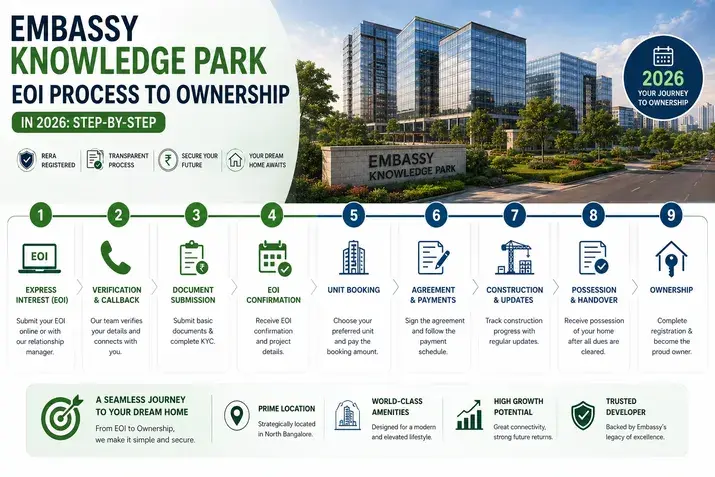
What You’re Actually Buying Into
It’s easy for real estate copy to lean on vague words like “luxury” and “premium.” Here’s what that actually looks like at Embassy Knowledge Park:
The Embassy Group name. This isn’t a first-time developer testing the market. Embassy Group has delivered over 85 million sq. ft. across commercial, residential, and hospitality spaces in India, and sponsored the country’s first publicly listed REIT. When you’re anxious about builder credibility — and every first-time buyer is — a track record like this does more reassurance than any brochure line could.
Embassy Knowledge Park Devanahalli 2 and 3 BHK apartments built for real families. The 2/3 BHK apartments in Devanahalli here start at ₹1.76 Cr onwards, with layouts designed around natural light and cross-ventilation rather than squeezing in maximum units per floor. If you’re picturing your morning coffee on a balcony that actually gets sunlight, this is that kind of layout.
Embassy Knowledge Park Villas, for those who want more room to grow. For buyers thinking further ahead — a bigger family, more space, complete independence — the Embassy Knowledge Park Devanahalli Villas start from ₹10 Cr* onwards, offering private plots and standalone living within the same secure, amenity-rich township.
A 40,000+ sq. ft. clubhouse. Not a marketing render — an actual planned amenity core with space for recreation, fitness, and community life, built for people who want their home to be more than four walls.
RERA registration in progress, giving early buyers the transparency of a project moving through the correct regulatory channel, with possession targeted for 2031.
A Construction-Linked Payment Plan (CLP). One of the more practical things this project gets right: you don’t pay the full amount upfront. Payments are tied to construction milestones, which means your money moves in step with visible progress — a meaningful relief if you’ve heard horror stories about builders sitting on buyer funds.
Just around 15 km from Kempegowda International Airport. For frequent flyers, NRI buyers, or anyone tired of a 90-minute commute, that proximity alone reshapes your daily life.
Addressing the Question You’re Probably Asking
“Is this too good to be true?” It’s a fair question, and honestly, a smart one to ask before committing your savings to any pre-launch project. The reassuring part here isn’t the price — it’s who’s behind it. Embassy Group’s three-decade legacy, combined with active RERA registration and a payment structure tied to actual construction milestones, means you’re not being asked to take a leap of faith. You’re being asked to trust a process that’s designed to be checked, verified, and tracked at every stage.
That said, no home search should end with a webpage. Numbers, layouts, and legacy only tell you so much — walking the actual site, seeing where your building will stand, and getting your specific questions answered by someone who knows the project inside out is what turns “interested” into “certain.”
Your Next Step
You don’t need to decide today. But you do deserve to see it for yourself — the land, the layouts, the location — before someone else secures the unit you were eyeing.
Schedule a site visit to Embassy Knowledge Park Devanahalli today, and take the next real step toward owning a home that was actually built with your life in mind.
First-Time Homebuyers Mistakes that common mistakes can cost thousands or even lakhs if they’re not identified early. Buying your first home is exciting, but many buyers focus only on the property and overlook the financial planning required for long-term ownership. Buying your first home is one of the biggest milestones in life. It brings excitement, a sense of achievement, and the dream of building your future. But after helping many first-time homebuyers over the years, I’ve realized that purchasing a home isn’t just about choosing the right project or location. It’s equally about making the right financial decisions.
I’ve met buyers who were emotionally ready to own a home but weren’t financially prepared for the journey ahead. Some focused only on the booking amount, while others assumed that once the home loan was approved, everything else would automatically fall into place. Unfortunately, that’s rarely how it works.
The biggest financial mistakes usually happen before buyers even sign the booking form. The good news is that almost all of them can be avoided with proper planning and guidance.
If you’re planning to buy your first apartment or villa, this guide will help you understand the financial mistakes I’ve personally seen buyers make and how you can avoid them.
Key Takeaways
- Understand the complete payment schedule before paying any booking amount.
- Don’t exhaust all your savings on the down payment.
- Compare home loan offers from multiple lenders.
- Budget for registration, interiors, and furnishing costs.
- Keep an emergency fund after booking.
- Buy a home that fits your long-term financial comfort, not just today’s affordability.
The most common financial mistakes first-time homebuyers make are:
- Paying the EOI or booking amount without understanding the payment schedule.
- Using all available savings as the down payment.
- Ignoring hidden ownership costs.
- Accepting the first home loan offer without comparing banks.
- Buying emotionally instead of based on affordability.
- Forgetting to budget for interiors and furnishing.
- Not maintaining an emergency fund after booking.
These mistakes may seem small individually, but together they can create unnecessary financial pressure for years.
Why Financial Planning Matters More Than the Property Itself
When people visit a project for the first time, they’re usually impressed by the sample apartment, clubhouse, amenities, or location. That’s completely natural.
What they don’t usually think about is the financial journey that starts after they decide to buy.
Buying a home isn’t a one-time payment. It’s a commitment that may continue for the next 20 to 30 years. Every decision you make today affects your financial stability tomorrow.
That’s why I always tell buyers:
Don’t ask yourself, “Can I book this property?” Ask yourself, “Can I comfortably own this property for the next 20 years?”
There’s a huge difference.
Mistake #1: Paying the EOI Without Understanding the Payment Plan
This is the biggest financial mistake I see among first-time buyers.
Many people visit a project during the pre-launch stage. They like the floor plan, understand the pricing, and quickly decide to pay the Expression of Interest (EOI) amount to secure a preferred unit.
To be honest, paying the EOI isn’t the mistake.
In many premium projects, paying an EOI early can actually help buyers secure priority unit allocation and better pricing.
The mistake is paying the EOI without understanding what happens next.
Many buyers assume they have plenty of time before making another payment.
Then reality hits.
The builder releases the next construction milestone, and another payment becomes due. Suddenly, buyers realize they haven’t planned their finances or completed their home loan process.
Instead of enjoying the excitement of buying a home, they begin worrying about arranging money within a short time.
I’ve personally seen buyers become stressed simply because nobody explained the construction-linked payment plan before they booked.
That’s why the payment schedule should always be discussed before paying the booking amount.
Why Understanding the Payment Plan Is Important
Every project follows a payment schedule.
It could be:
| Payment Stage | What Happens |
|---|---|
| Expression of Interest (EOI) | Reserve your preferred unit during pre-launch. |
| Booking Amount | Official confirmation of the selected unit. |
| Agreement Stage | Sale agreement execution and initial payment. |
| Construction Milestones | Payments linked to project progress. |
| Possession | Final payment, registration, and handover. |
Many first-time buyers only prepare for the first payment. The remaining stages often surprise them because they never planned for them financially.
A Real Experience From My Buyer Consultations
One buyer visited the project with family.
They loved the apartment layout and immediately decided to pay the EOI amount because they didn’t want to lose their preferred unit.
A few weeks later, they contacted me again.
This time, they weren’t asking about amenities or floor plans.
They were worried about arranging the next installment.
Their home loan process hadn’t started.
Most of their savings had already gone toward the booking amount.
Eventually, they began questioning whether buying at that stage was the right decision.
Situations like this are more common than most people realize.
This is exactly why I spend time explaining the payment schedule before discussing anything else.
My Advice Before Paying Any Booking Amount
Whenever I meet a first-time buyer, I always start with two simple questions.
“What is your total budget?”
The answer helps me understand what type of property is financially comfortable for them.
Then I ask:
“How will you manage the future installments?”
This question often surprises buyers.
Many have already calculated the booking amount but haven’t thought about future construction-linked payments.
Once I understand their financial capacity, I explain the complete payment plan and only then discuss the home loan options.
Buying a home becomes much easier when you know exactly what financial commitments lie ahead.
Mistake #2: Spending Every Rupee on the Down Payment
Another mistake I see frequently is buyers using every bit of their savings for the down payment.
Their intention is good.
They believe a larger down payment means a smaller loan and lower EMI.
Mathematically, that’s correct.
Financially, it isn’t always the smartest decision.
I’ve seen buyers empty their savings account just to reduce the loan amount.
Then they realize they still need money for:
- Stamp duty and registration
- Interior work
- Modular kitchen
- Wardrobes
- Furniture
- Electrical appliances
- Emergency medical expenses
- Family commitments
Instead of enjoying their new home, they spend the next few months worrying about money.
Owning a home should improve your financial stability, not create constant financial pressure.
A healthy emergency fund is just as important as the down payment.
Sometimes having liquidity gives you more confidence than having a slightly lower EMI.
Mistake #3: Accepting the First Home Loan Offer Without Comparing Banks
This is another mistake that can cost buyers a significant amount over the life of their loan.
Many first-time homebuyers believe that once a builder recommends a bank or their salary account bank approves the loan, the process is complete. To be honest, that’s where you should start comparing, not stop.
A small difference in interest rates may not seem important today, but over a 20 to 30-year tenure, it can translate into several lakhs of rupees.
I always advise buyers to compare at least three or four banks before making a final decision.
Don’t compare only the interest rate. Also look at:
- Processing fees
- Prepayment charges (if applicable)
- Floating vs. fixed interest rates
- Loan disbursement timeline
- Customer service and responsiveness
Many banks also offer special schemes for salaried employees, self-employed professionals, NRIs, and women borrowers. Spending a few extra days comparing lenders can save you a substantial amount over the long term.
Mistake #4: Ignoring Interior Costs
One of the biggest surprises for first-time buyers comes after possession.
They receive the keys and then realize the apartment is still a raw space.
The builder has delivered the home as promised, but it still needs to become your home.
Many buyers forget to include the cost of:
- Modular kitchen
- Wardrobes
- False ceiling
- Curtains and blinds
- Lighting fixtures
- Air conditioners
- Sofa and dining furniture
- Home appliances
- TV units
- Decorative work
Depending on the apartment size and your preferences, interior costs can easily range from a few lakhs to much higher.
I’ve seen buyers spend every rupee on the down payment, only to postpone interiors because they simply didn’t have enough savings left.
That’s why I always recommend budgeting for interiors before booking the property, not after possession.
Mistake #5: Buying Emotionally Instead of Financially
Buying a home is an emotional decision.
Buying beyond your financial capacity is a financial mistake.
These are two different things.
I’ve seen buyers fall in love with a larger apartment simply because the sample flat looked beautiful.
Instead of asking whether they could comfortably afford it, they focused only on owning it.
A home should improve your quality of life.
It shouldn’t become a monthly source of stress.
That’s why I always begin every consultation with two simple questions:
What’s your total budget?
and
How will you comfortably manage the future installments?
Only after understanding these answers do I recommend a property.
My Buyer Qualification Process
Every buyer has different priorities.
Some want the largest apartment.
Others want the lowest EMI.
Some focus entirely on investment.
Rather than recommending the same property to everyone, I first try to understand their financial situation.
My conversation usually follows this sequence:
Step 1: Understand the Budget
The first question is simple.
“What’s your comfortable budget?”
Notice the word comfortable.
There is a big difference between your maximum budget and the amount you can comfortably afford without affecting your lifestyle.
Step 2: Discuss Future Installments
Many buyers only calculate today’s booking amount.
Very few calculate the payments that will come six months or one year later.
Understanding the construction-linked payment schedule helps buyers prepare their finances in advance.
Step 3: Discuss Home Loan Options
Only after the buyer understands the payment schedule do I recommend moving forward with the home loan process.
This avoids unnecessary surprises later.
How Much Monthly Income Is Comfortable?
There isn’t one number that works for everyone.
Income, existing loans, family responsibilities, and financial goals all play a role.
However, for premium residential properties, I generally find that buyers with a household income in the range of ₹3–5 lakh per month or more are usually in a stronger position to manage EMIs and other ownership costs comfortably. That doesn’t mean everyone in this income range should buy, or that others cannot—it simply reflects a pattern I’ve observed among buyers looking at higher-value homes.
More important than income alone is whether the buyer has:
- Stable earnings
- An emergency fund
- Manageable existing debt
- A realistic long-term budget
Affordability should always be assessed holistically.
A Financial Planning Checklist Before Booking
Before paying any booking amount, I recommend checking the following:
| Financial Checklist | Why It Matters |
|---|---|
| Do I understand the payment schedule? | Avoids cash-flow surprises during construction. |
| Have I compared multiple home loan offers? | May reduce long-term borrowing costs. |
| Do I have an emergency fund? | Helps handle unexpected expenses without stress. |
| Have I budgeted for interiors? | Prevents delays in making the home move-in ready. |
| Am I buying within my comfort zone? | Keeps long-term finances healthy. |
| Have I calculated registration and statutory charges? | Ensures the total purchase cost is realistic. |
| Can I manage the EMI alongside my current lifestyle? | Reduces financial strain over the loan tenure. |
People often spend months choosing the right project. Spend the same amount of time planning your finances. It can save years of financial stress.
A Real Buyer Story That Changed My Perspective
One conversation with a first-time buyer still stands out.
The buyer had already decided to purchase a premium apartment. They had arranged the booking amount and were eager to secure their preferred unit. Everything looked perfect.
Before moving ahead, I asked two simple questions:
“What is your total budget?”
“How will you manage the future installments?”
There was complete silence for a few seconds.
The buyer had calculated only the booking amount.
They hadn’t planned the construction-linked payments.
They also hadn’t finalized a home loan or considered registration charges and interior costs.
That’s when I realized many first-time buyers don’t actually have a buying problem.
They have a planning problem.
After discussing the complete payment schedule and future financial commitments, the buyer decided to wait for a short period, improve financial preparedness, and then move forward with confidence.
Sometimes delaying a purchase by a few months is a smarter decision than struggling financially for several years.
My Personal Financial Strategy If I Were Buying My First Home
People often ask me what I would personally do if I were buying my first property.
This isn’t financial advice. It’s simply how I think about long-term money management.
Personally, I wouldn’t focus only on reducing the loan tenure.
Instead, I would consider taking a 25 to 30-year home loan, provided the EMI comfortably fits my budget.
Why?
A longer tenure generally reduces the monthly EMI, which helps maintain better cash flow.
Rather than using every available rupee to repay the loan as quickly as possible, I’d keep part of my monthly surplus invested in instruments that match my risk tolerance, such as diversified mutual funds or fixed deposits. Over the long term, disciplined investing may help build wealth while preserving liquidity for emergencies or future opportunities.
That said, this strategy isn’t suitable for everyone.
It depends on:
- Income stability
- Existing financial commitments
- Investment discipline
- Loan interest rate
- Risk tolerance
- Long-term financial goals
Some buyers prefer becoming debt-free sooner, while others prioritize flexibility and investing. There isn’t a single “correct” approach.
If you’re unsure, discuss your options with a qualified financial advisor before deciding. While you making the decision you can compare New Projects in Bangalore and also do compare with the location specific projects New Projects in Devanahalli and New Projects in Thanisandra.
Financial Mistakes That Buyers Often Ignore
Many buyers prepare only for the visible costs.
The invisible costs are the ones that create financial pressure later.
| Common Mistake | Possible Long-Term Impact |
|---|---|
| Paying EOI without understanding the payment schedule | Cash-flow issues during construction |
| Spending all savings on the down payment | No emergency fund for unexpected expenses |
| Not comparing home loan offers | Higher borrowing costs over the loan tenure |
| Ignoring interior expenses | Additional borrowing after possession |
| Buying beyond financial comfort | EMI stress and reduced financial flexibility |
| Focusing only on the property price | Underestimating the total cost of ownership |
The smartest buyers don’t just ask, “How much does the property cost?” They ask, “How much will it cost me to own this home comfortably over the next 20 years?”
Practical Tips Before Booking Your First-Time Homebuyers
Based on my experience with first-time buyers, here’s the advice I give before anyone pays a booking amount:
1. Know Your Comfortable Budget
Don’t buy based on what the bank is willing to lend. Buy based on what you can comfortably repay while maintaining your lifestyle.
2. Understand Every Stage of the Payment Plan
Before paying the EOI or booking amount, ask for the complete payment schedule. Know when each installment is due so you can plan your finances well in advance.
3. Compare Home Loans
Speak to multiple banks, compare interest rates, processing fees, repayment flexibility, and customer service. Even a small difference can matter over a long loan tenure.
4. Budget for the Complete Home
A home’s price is only one part of the equation. Registration, interiors, furniture, appliances, and moving costs should all be part of your budget from day one.
5. Keep an Emergency Fund
Owning a home should give you security, not financial stress. Maintain a separate emergency fund so unexpected expenses don’t disrupt your finances.
Frequently Asked Questions
What is the biggest financial first-time homebuyers mistakes make?
One of the most common mistakes is paying the booking amount or EOI without understanding the complete payment schedule. This can create cash-flow challenges if future installments arrive sooner than expected.
Should I spend all my savings on the down payment?
Generally, no. While a larger down payment can reduce your loan amount, it’s also important to retain enough savings for emergencies, registration charges, interiors, and other ownership costs.
Is comparing home loan interest rates really important?
Yes. Comparing offers from multiple lenders can help you find a loan that better suits your financial needs. It’s also worth comparing processing fees, repayment flexibility, and service quality—not just the interest rate.
How should I decide my home-buying budget?
Start with your monthly income, existing financial commitments, savings, and future goals. Choose a home that allows you to manage repayments comfortably rather than stretching your finances to the limit.
Should I book a property before my home loan is approved?
That depends on the project’s booking process and your financial situation. Before paying any booking amount, make sure you understand the payment schedule and are confident that you can meet future financial commitments.
Final Thoughts
Buying your first home is one of life’s biggest achievements, but it’s also one of the biggest financial commitments you’ll ever make.
The buyers who enjoy the journey the most aren’t necessarily those with the highest income. They’re the ones who plan carefully, understand every cost, and make decisions that fit their financial reality.
From my experience, asking a few simple questions before booking can prevent many of the mistakes that create stress later.
Think beyond the booking amount. Plan for the complete ownership journey. Compare your financing options, prepare for additional costs, and always leave room in your budget for the unexpected.
A well-planned purchase doesn’t just help you buy a home—it helps you enjoy owning it.
Check Related Projects in North Bangalore in the EOI Phase Don’t do the same mistake while you buying the property: Embassy Knowledge Park, Nikoo Homes 9, L&T Thanisandra and Prestige Sadahalli.