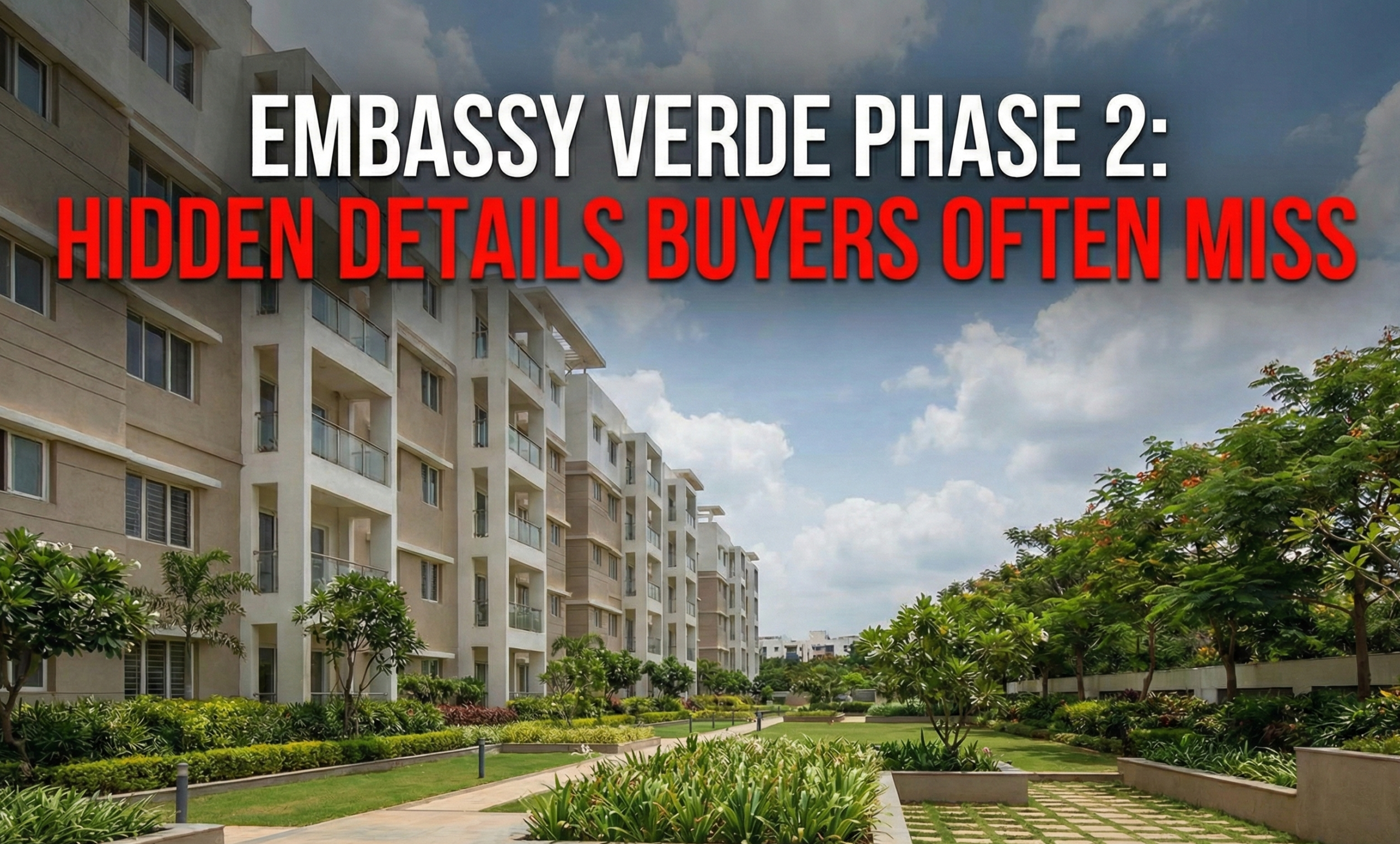
Looking Deeper Into Embassy Verde Phase 2
When evaluating a residential project, most buyers focus on headline factors—brand name, pricing, location, and amenities. While Embassy Verde Phase 2 performs well across these visible parameters, its real strength lies in the quieter details that are easy to miss during a launch visit, a brochure walkthrough, or a short site tour. These details rarely create instant excitement, but they play a decisive role in everyday comfort, long-term satisfaction, and the project’s ability to age well. This guide focuses only on those often-overlooked aspects that matter after the booking form is signed and the novelty wears off.
Designed With Experience, Not Assumptions
One of the most understated advantages of Embassy Verde Phase 2 is that it is shaped by execution experience rather than first-phase assumptions. As a subsequent phase, its planning reflects real-world feedback—how residents actually move through spaces, where congestion forms, how shared areas are used, and which design choices genuinely improve daily life.
Internal road layouts, turning radii, pedestrian pathways, and block-to-block spacing show refinement that typically comes only after a community has been lived in for some time. Wider internal roads reduce vehicle bottlenecks during peak hours, clearer pedestrian segregation improves safety, and better building orientation enhances openness and airflow.
These refinements may not stand out in marketing visuals, but they strongly influence how organized and calm the community feels once fully occupied. Over time, such planning maturity reduces friction between residents, lowers wear on shared infrastructure, and contributes to a more predictable, low-stress living environment.
Amenities Planned for Longevity, Not Launch Impact
Amenities are often designed to impress at launch, but far fewer projects consider how those spaces will function years later. In Embassy Verde Phase 2, amenity planning appears focused on long-term usability rather than short-term visual impact.
Instead of clustering all facilities into a single showcase zone, amenities are distributed and positioned to remain accessible without disrupting residential privacy. This separation helps manage noise, preserves quiet zones, and allows amenities to function independently without overwhelming nearby homes.
Another overlooked factor is capacity planning. Amenities designed to handle regular, everyday usage across a growing population are less likely to feel crowded or deteriorate quickly. This means facilities remain functional, clean, and relevant even as occupancy increases. Over time, this approach protects both lifestyle quality and maintenance efficiency—two aspects that directly affect resident satisfaction and resale perception.
Layout Efficiency That Shapes Everyday Living
While carpet area figures attract attention, real comfort is determined by how intelligently space is used. Embassy Verde Phase 2 places emphasis on layout efficiency—how rooms connect, how furniture fits, and how daily movement flows within the home.
Proportionate room sizing, sensible passage widths, minimal structural obstructions, and usable balconies reduce the need for compromises once residents move in. Storage placement, natural light distribution, and ventilation paths also contribute to a home that feels easier to live in, not just visually appealing.
These details rarely influence buying decisions during a site visit but become critical within months of occupancy. Homes that support daily routines without constant adjustment tend to age better, retain demand in the resale market, and appeal to a wider range of future buyers.
Surroundings That Remain Relevant Over Time
Location is often evaluated in terms of distance alone, but long-term value depends on how surroundings evolve. Embassy Verde Phase 2 benefits from being situated in an area where infrastructure growth, social development, and connectivity improvements are expected to progress steadily rather than speculatively.
This measured growth supports a stable residential ecosystem—one where daily conveniences, employment access, and civic infrastructure develop in parallel. Such environments tend to experience consistent demand, making them less vulnerable to short-term market cycles or sudden oversupply.
For buyers, this translates into more predictable appreciation and sustained liveability. Projects embedded in gradually maturing neighborhoods often outperform those driven purely by hype, especially over longer holding periods.
Final Thought: Details That Matter After Possession
The strengths of Embassy Verde Phase 2 Bangalore are not dramatic or headline-grabbing—but they are decisive. Thoughtful planning informed by experience, amenities designed to endure daily use, layouts that support real-life living, and surroundings positioned for stable growth collectively shape a more reliable ownership experience.
Buyers who look beyond surface-level features often discover that these understated details define satisfaction years after possession. And it is precisely these often-missed aspects that position Embassy Verde Phase 2 as a well-considered residential choice rather than just another branded development.